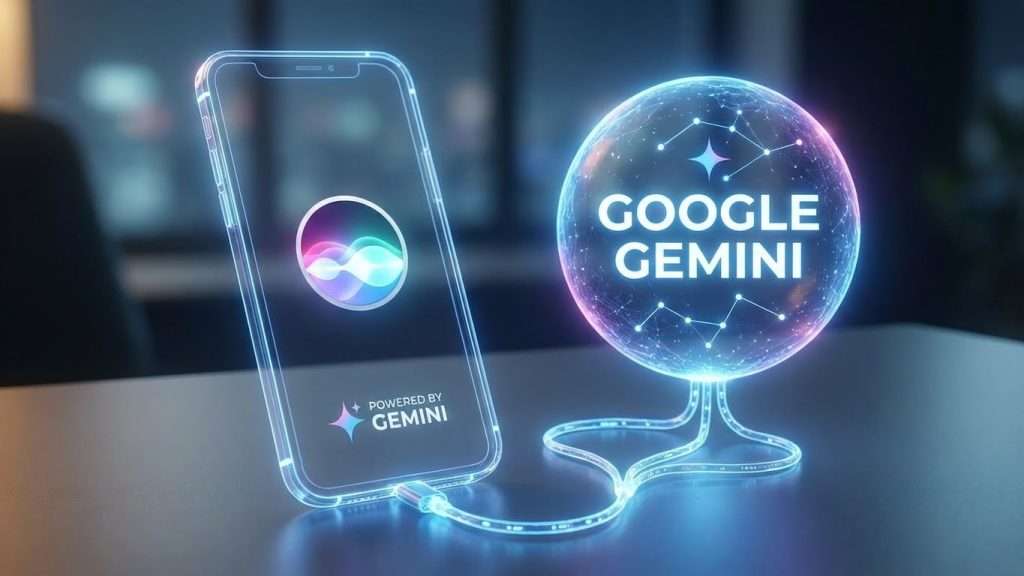
Apple Leverages Google’s Gemini AI to Enhance Siri
In a surprising move that has caught the attention of the tech world, Apple has officially chosen Google’s Gemini AI models to power the next generation of its Siri voice assistant. This partnership is expected to bring significant upgrades to Siri, potentially arriving with the upcoming iOS 26.4 update. Among the anticipated improvements are in-app actions, personal context awareness, and enhanced on-screen responsiveness, all designed to make Siri more intuitive and capable.
Apple is reportedly deploying a massive 1.2-trillion-parameter custom Gemini AI model on its private cloud servers. This infrastructure supports Apple’s Private Apple Intelligence framework, where simpler AI tasks are handled directly on the device, while more complex processes are securely offloaded to Apple’s cloud using encrypted, stateless data for inference. This hybrid approach aims to balance user privacy with powerful AI capabilities.
Context and Industry Reactions
While this collaboration marks a significant step forward for Apple’s AI ambitions, it has not gone without controversy. Elon Musk, CEO of Tesla and xAI, expressed strong disapproval of the deal, describing it as an “unreasonable concentration of power for Google.” Musk’s criticism comes amid his ongoing legal battles with Apple and OpenAI, accusing them of anti-competitive behaviour.
Despite Musk’s objections, the financial benefit to Google appears limited, with reports suggesting the company will earn approximately $1 billion annually from licensing its Gemini models to Apple. Meanwhile, Apple stands to gain considerably by integrating Google’s advanced AI technology into Siri, thereby enhancing the assistant’s functionality and user experience without users necessarily recognising Google’s involvement.
Strategic Implications for Apple
This partnership allows Apple to significantly boost the appeal and effectiveness of Siri, strengthening its ecosystem’s network effect. Users interacting with Siri will experience a smarter assistant capable of handling more complex tasks, such as booking restaurant reservations, without needing to know the underlying AI technology is powered by Google’s Gemini. This seamless integration helps Apple maintain its brand identity while benefiting from cutting-edge AI advancements.
Moreover, this collaboration serves as a strategic buffer, enabling Apple to leverage Google’s AI expertise while it continues to develop its own in-house AI capabilities. As Apple gradually enhances its proprietary AI models, the reliance on Gemini can be adjusted accordingly, ensuring a smooth transition and sustained competitive edge.
Looking Ahead
As Apple prepares to roll out these AI enhancements with iOS 26.4, it will be interesting to observe how users respond to the revamped Siri experience. The partnership with Google’s Gemini represents a notable shift in Apple’s AI strategy, signalling a more collaborative approach in an increasingly competitive landscape. Meanwhile, industry watchers will be keeping an eye on any further reactions from rivals like Elon Musk and the broader implications for AI development in consumer technology.
Overall, this alliance underscores the evolving dynamics of AI integration in smartphones, where collaboration between tech giants can drive innovation while also stirring debate about market power and competition.
Source: Twitter