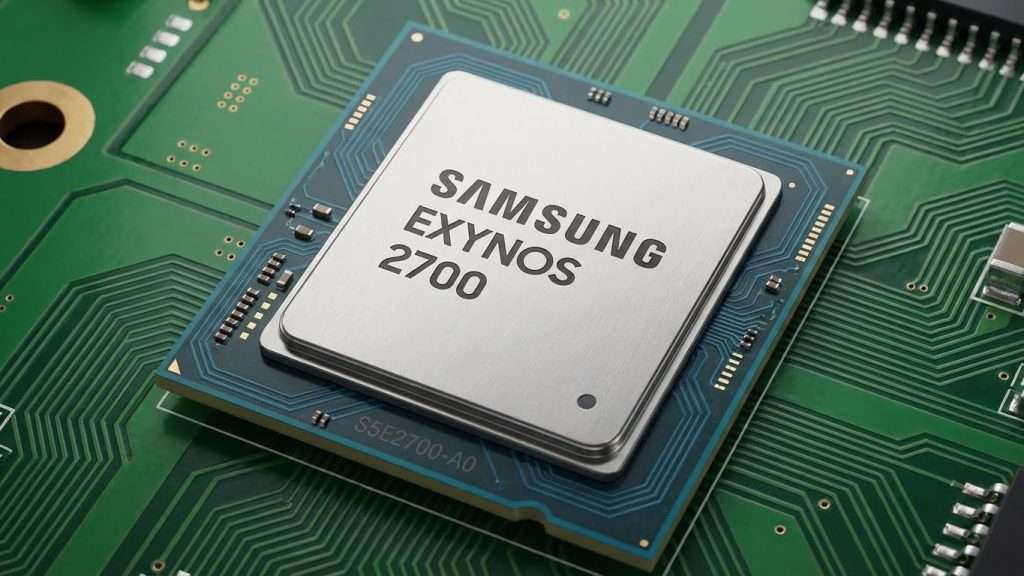
Exynos 2700 Surfaces in Geekbench 6 with Unusual CPU Configuration
Samsung’s upcoming flagship chipset, the Exynos 2700, has recently appeared in a Geekbench 6 benchmark listing, offering an early glimpse into its architecture. The leak showcases a distinctive deca-core CPU cluster arranged in a ‘4 + 1 + 4 + 1’ configuration, which is quite different from typical layouts. Although the benchmark scores themselves are not particularly impressive, they provide valuable insight into the chip’s developmental phase and Samsung’s testing approach.
Key Specifications and Testing Insights
The device running the Exynos 2700 is believed to be an ERD (Engineering Reference Device) development board, primarily used to validate scheduler and architecture performance. Notably, the chipset’s highest recorded clock speed in these tests is 2.88GHz. Previous leaks have revealed that the Exynos 2700, codenamed ‘Ulysses’, will support LPDDR6 RAM and UFS 5.0 storage, indicating a focus on high-speed memory and storage technologies.
Interestingly, the OpenCL score for the Exynos 2700 is significantly lower than that of its predecessor, the Exynos 2600, when running the same API. This suggests that the current benchmark reflects an early prototype rather than a finalised product. A tipster known as Ice Universe explained on X (formerly Twitter) that the chipset is being tested with a mixture of next-generation and older-generation CPU cores. This blend is intentional, aiming to evaluate energy-aware scheduling, power migration, and system stability under Android 16.

Context and Samsung’s Strategy
Samsung is reportedly advancing its semiconductor manufacturing capabilities, having achieved 50 percent yields on its 2nm GAA (Gate-All-Around) process. The Exynos 2700 is expected to be fabricated using the second-generation iteration of this process, referred to as SF2P. This development aligns with Samsung’s broader strategy to reduce its reliance on external partners like Qualcomm by pushing its own silicon forward.
Additionally, Samsung is said to be working on the Exynos 2800, which could mark a significant milestone as the company’s first smartphone SoC to feature an in-house GPU. This would expand Samsung’s reach beyond mobile devices and further strengthen its position in the semiconductor market.
What to Expect Next
Given that the Exynos 2700 is still in early testing stages, the current CPU cluster configuration and clock speeds are likely to change before the final release. Samsung appears committed to optimising this new chipset to compete with Qualcomm’s Snapdragon 8 Elite Gen 6 series. Fans and industry watchers should keep an eye on further leaks and official announcements to see how Samsung’s next-generation flagship chipset evolves.
Overall, the Exynos 2700 benchmark leak provides a fascinating look at Samsung’s ongoing efforts to innovate in the high-performance mobile chipset space, even if the current results are preliminary.