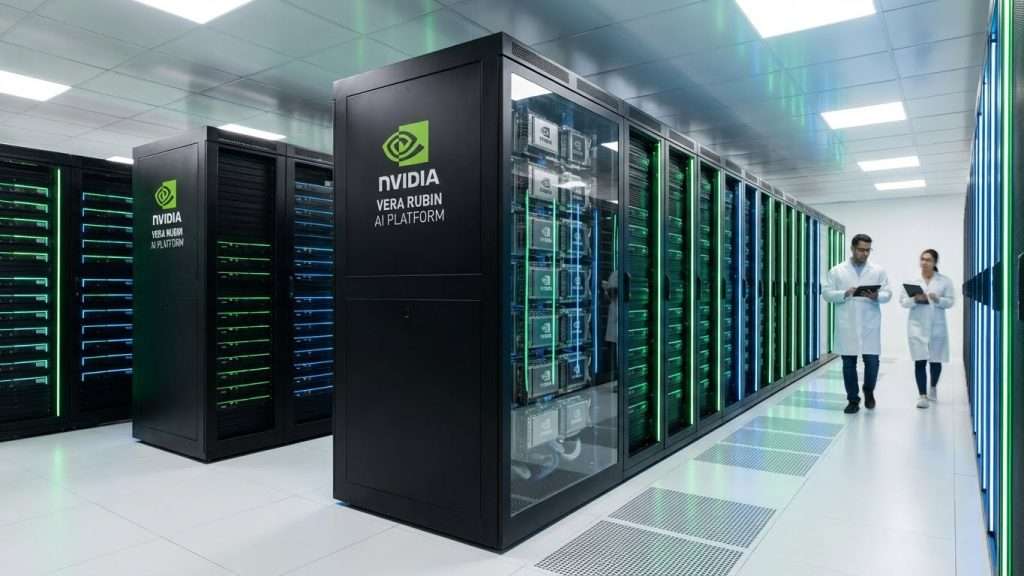
NVIDIA’s Vera Rubin GPUs Set to Strain Global Memory Supply
NVIDIA’s latest AI-focused GPUs, codenamed Vera Rubin, are poised to consume an unprecedented amount of memory resources this year, potentially equivalent to the memory used by 100 to 150 million smartphones worldwide. This surge in demand is expected to intensify the already tight global memory market, affecting major smartphone manufacturers such as Apple and Samsung. KeyBanc analysts have highlighted that this consumption could account for nearly 10% of the total smartphone memory market, signalling significant ripple effects across the industry.
Innovative Memory Solutions and Their Impact
The Vera Rubin GPUs introduce a new architectural approach to handling AI workloads, particularly through a feature called Inference Memory Context Storage (ICMS). This system is designed to manage the large temporary memory logs, known as KV Cache, that are essential for AI query processing. Unlike previous NVIDIA AI GPUs that stored this data in high bandwidth memory (HBM), the Vera Rubin GPUs allocate dedicated NAND memory for this purpose. This shift enables configurations with up to 16 terabytes of NAND per GPU rack, amounting to over a petabyte in certain setups.
Such extensive memory requirements contribute to the escalating pressure on the global memory supply chain, which is already constrained. The increased demand for NAND and DRAM is forcing suppliers and manufacturers to reconsider pricing structures and availability.
Consequences for Apple and Samsung Amid Memory Crunch
Apple and Samsung, two of the world’s largest smartphone OEMs, are feeling the strain of these memory shortages acutely. Apple, despite having secured NAND supplies through early 2026, faces anticipated price hikes from suppliers like KIOXIA once long-term agreements are finalised. DRAM availability poses an even greater challenge for Apple, as favourable contracts are expiring and prices are expected to surge by over 50% in the first quarter of 2026.
Moreover, Apple is encountering difficulties beyond memory components. A recent report from Nikkei Asia reveals that Apple is struggling to obtain sufficient quantities of high-end glass fibre cloth (T-glass), a critical material used in microchip substrates for thermal stability and reliability. The company has been forced to seek assistance from the Japanese government and explore alternative suppliers, including Mitsubishi Gas Chemical. In the meantime, Apple is considering the use of lower-grade T-glass, though this would require thorough testing to ensure quality standards.
Samsung’s Internal Price Hikes Reflect Industry-Wide Challenges
Samsung is not insulated from these pressures despite manufacturing its own memory chips. Reports indicate that Samsung’s Device Solutions (DS) division has imposed substantial price increases—between 60% and 70%—on DRAM supplied to its own Mobile eXperience (MX) division. This internal pricing shift is indicative of wider supply constraints and cost inflation. Consequently, Samsung plans to raise the price of its upcoming Galaxy S26 series by approximately $30 to $60 in certain markets, including South Korea.
Given that memory components typically constitute about 20% of a smartphone’s bill of materials, these cost increases could translate into handset price hikes of $100 to $150. Such adjustments may dampen consumer demand and reshape market dynamics in 2026.
Looking Ahead: What to Expect for 2026 Smartphones
The memory consumption demands of NVIDIA’s Vera Rubin GPUs underscore the growing competition for scarce semiconductor resources, impacting even the largest players in the smartphone industry. As Apple and Samsung navigate these challenges, consumers may see higher prices on flagship devices next year. Observers should watch closely how supply chains adapt and whether alternative materials or technologies emerge to alleviate these bottlenecks.
For further insights into the evolving memory market and its influence on smartphone pricing, this situation remains a critical story to follow as 2026 approaches.