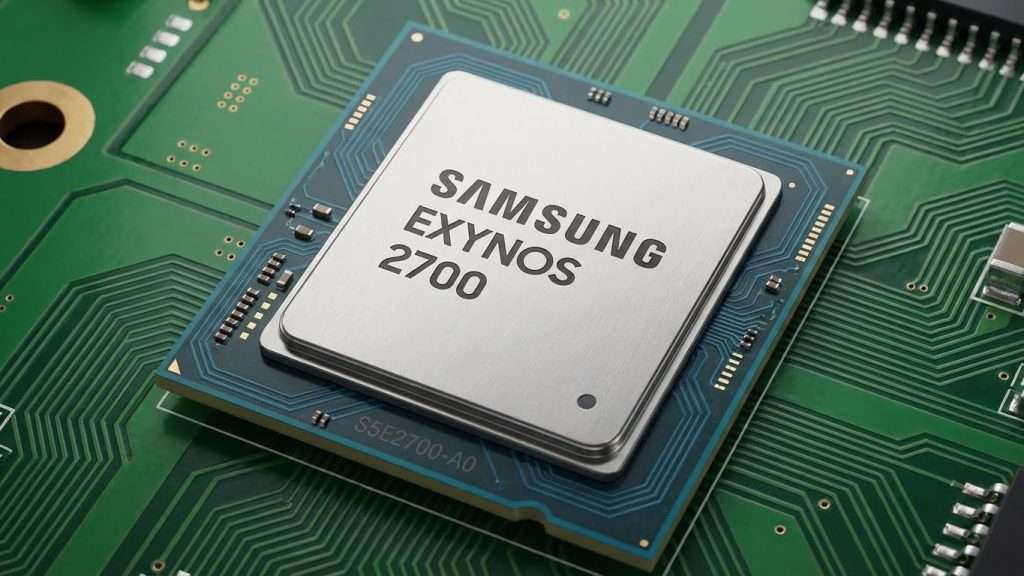
Introducing the Exynos 2700 and Its Advanced 2nm Process
Samsung is gearing up to launch its next-generation chipset, the Exynos 2700, which will be built on an improved 2nm Gate-All-Around (GAA) process known as SF2P. This advancement follows the company’s recent success with the Exynos 2600 and its initial 2nm SF2 node, signalling that Samsung has achieved stable yields and is ready to push forward with a more refined manufacturing technology. The Exynos 2700 promises to deliver notable enhancements in performance, power efficiency, and chip size compared to its predecessor.
Key Specifications and Features of the Exynos 2700
The Exynos 2700 is expected to offer a 12% boost in performance, a 25% reduction in power consumption, and an 8% smaller chip area compared to the original SF2 process used in the Exynos 2600. While Samsung is likely to continue using ARM’s Cortex CPU cores rather than switching to in-house designs like Qualcomm’s Oryon series, the chipset may feature ARM’s latest C2 CPU designs. On the graphics front, the Exynos 2700 could debut the Xclipse 970 GPU, potentially based on AMD’s RDNA 5 architecture, an upgrade from the RDNA 4-based Xclipse 960 found in the Exynos 2600.
In terms of memory and storage, the new chipset is anticipated to support cutting-edge standards such as LPDDR6 RAM and UFS 5.0 storage, although final adoption depends on Samsung’s Mobile Experience division and their plans for the Galaxy S27 series. A leaked benchmark hinted at an unusual CPU cluster configuration of ‘4 + 1 + 4 + 1’ cores, but this remains speculative, as Samsung is reportedly experimenting with different combinations of older and newer cores to optimise performance and efficiency.
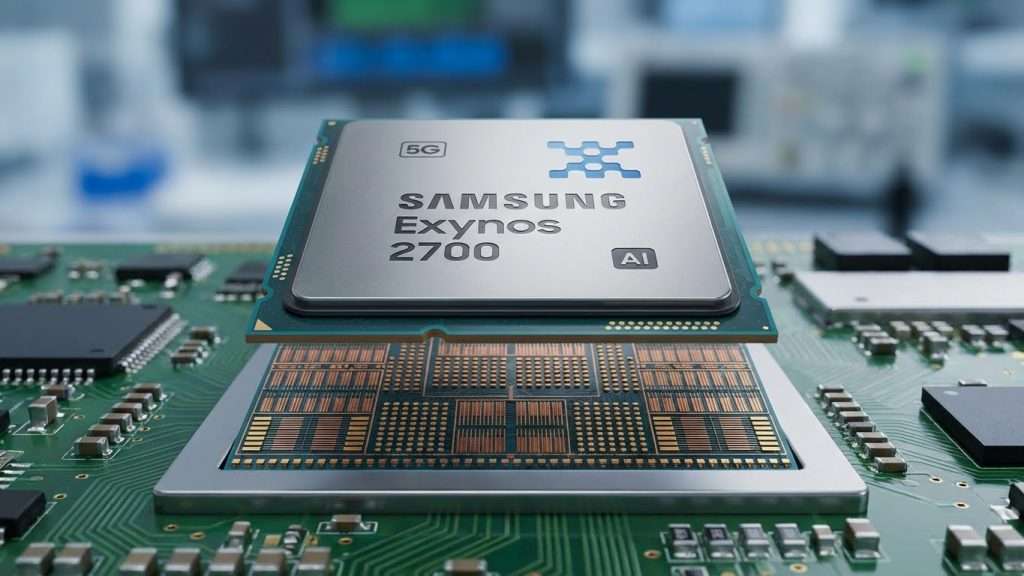
Innovations in Thermal Management
Samsung has already incorporated its Heat Pass Block (HPB) technology in the Exynos 2600 to manage thermal output effectively. For the Exynos 2700, a new heat dissipation approach called ‘side by side’ (Sb) may be introduced. This design arranges the individual silicon dies horizontally rather than stacking them, which, combined with HPB, could allow the chipset to run cooler, achieve higher speeds, and maintain a thinner profile. Such improvements are crucial for maintaining performance in compact smartphone designs.
Context and Expectations for Launch
According to analyst Park Yu-ak from Kiwoom Securities, mass production of the Exynos 2700 is expected to begin in the latter half of 2026. This timeline suggests that the chipset could debut alongside or shortly after the Exynos 2600. Samsung may also increase the presence of Exynos chips in its flagship Galaxy S27 series, potentially raising the share of devices equipped with the Exynos 2700 to 50%, up from 25% with the Galaxy S26. This shift would underline Samsung’s growing confidence in its in-house chip solutions and help reduce reliance on Qualcomm’s processors, improving overall profitability.
As Samsung continues to refine its 2nm GAA technology and push the boundaries of mobile chipset performance, the Exynos 2700 stands as a promising step forward. Fans and industry watchers should keep an eye on further leaks and official announcements as the launch window approaches.