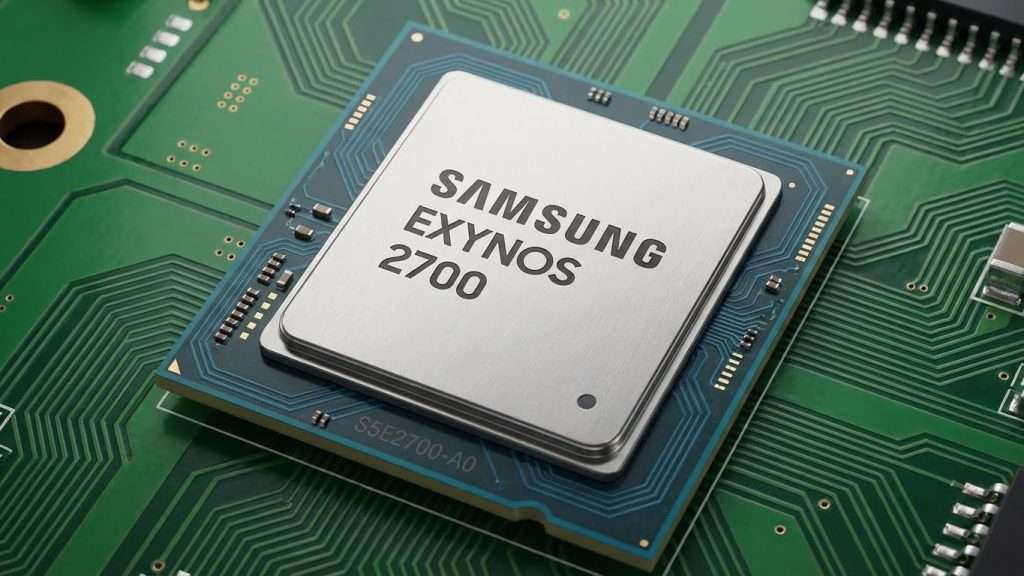
Exynos 2600 Leads in Ray Tracing Performance
Samsung’s latest Exynos 2600 chip has made a significant impression in the mobile chipset arena by securing the top spot on the Basemark Ray Tracing leaderboard. This achievement highlights the prowess of its Xclipse 960 GPU, which has outpaced Qualcomm’s Snapdragon 8 Elite Gen 5 in ray tracing performance by approximately 10-15%. The Xclipse 960 GPU is a key factor behind this success, showcasing Samsung’s advancements in graphics capabilities for 2026.
Key Specifications and Technological Innovations
The Exynos 2600 is Samsung’s first chip to utilise the cutting-edge 2nm Gate-All-Around (GAA) process. This 3D transistor architecture surrounds the channel with the gate on all four sides, employing vertically stacked nanosheets to improve electrostatic control and reduce voltage thresholds. Additionally, the chip incorporates Fan-Out Wafer Level Packaging (FOWLP), which reduces the package size while increasing I/O connections.
Thermal management has also been enhanced through the introduction of a copper-based Heat Path Block (HPB), which directly contacts part of the application processor. This innovation improves thermal resistance by 16% and lowers the chip’s operating temperature by an average of 30% compared to previous Samsung generations.
Architecturally, the Exynos 2600 features a high-performance CPU configuration with one C1-Ultra core clocked at 3.90GHz (some leaks suggest 3.80GHz), three C1-Pro cores running at 3.25GHz, and six additional C1-Pro cores at 2.75GHz. The Xclipse 960 GPU supports ray tracing and is based on a customised version of AMD’s RDNA 4 architecture, marking a significant leap in graphical processing power. The chip also includes an AI engine with a 32K MAC Neural Processing Unit (NPU) and supports LPDDR5X RAM.
Performance Comparisons and Consistency
Prior to topping the Basemark Ray Tracing leaderboard, the Exynos 2600 demonstrated strong Vulkan performance, achieving a score of 27,478. This was very close to the Snapdragon 8 Elite Gen 5’s score of 27,875, indicating near parity in general graphics performance. However, the Exynos 2600’s ray tracing capabilities have now clearly surpassed its rival.
Further benchmarking on Geekbench 6 OpenCL tests revealed that the Xclipse 960 GPU exhibits remarkable consistency, with only a 3.4% variation between its lowest and highest scores. This steadiness in performance is something the Snapdragon 8 Elite Gen 5 has yet to match, underscoring Samsung’s optimisation efforts.
Looking Ahead to the Galaxy S26 Series
The Exynos 2600 is expected to debut officially with Samsung’s upcoming Galaxy S26 series, signalling a new era of performance and efficiency for Samsung’s flagship devices. With its advanced manufacturing process, innovative cooling solutions, and powerful GPU, the chip positions Samsung strongly against competitors in the high-end mobile chipset market.
As the Galaxy S26 launch approaches, it will be interesting to see how the Exynos 2600 performs in real-world scenarios and whether it can maintain its lead in graphics and AI tasks. Samsung’s progress with this chip suggests a competitive 2026 for mobile processors, especially in gaming and multimedia applications.
For more detailed insights and ongoing updates, follow the latest benchmarks and official announcements as we get closer to the Galaxy S26 release.