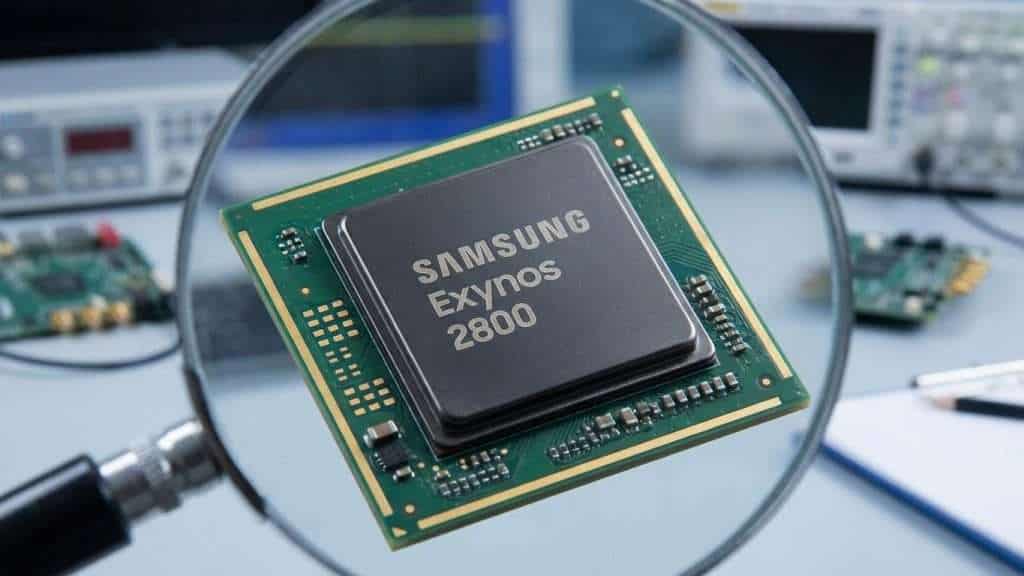
Samsung’s Next-Gen Exynos 2800 Chipset with Custom GPU
Samsung is reportedly preparing to launch its Exynos 2800 chipset in 2027, marking a significant milestone as it is expected to feature the company’s first in-house graphics processing unit (GPU). This development represents a major step forward for Samsung’s semiconductor division, signalling a move towards greater independence in GPU design and manufacturing. The inclusion of a custom GPU could allow Samsung to broaden its technology applications beyond smartphones, potentially impacting areas such as smart glasses, autonomous vehicles, and robotics.
Key Features and Technological Advances
The Exynos 2800 is anticipated to build on the foundation laid by the recently announced Exynos 2600, which currently employs the Xclipse 960 GPU developed in collaboration with AMD. While specific details about the manufacturing process of the Exynos 2800 remain undisclosed, reports suggest that Samsung has completed the basic design phase for its second-generation 2nm Gate-All-Around (GAA) process. There is also speculation that the chipset might utilise either this 2nm GAA process or the upcoming third-generation 2nm process, known as SF2+, expected within the next two years.
Samsung’s decision to develop an in-house GPU is driven not only by the desire to compete more effectively with rivals such as Apple and Qualcomm in smartphones and tablets but also to create a unified ecosystem that leverages parallel computing capabilities. This custom GPU architecture is designed to support a diverse range of applications, extending Samsung’s reach into emerging fields like autonomous driving software and robotics.

Background and Strategic Context
Samsung’s push into in-house GPU development has been underway for several years, initially focusing on lower-end hardware before targeting flagship chipsets. The recent hiring of John Rayfield, a former AMD Vice President, has bolstered Samsung’s expertise in graphics technology, reflecting the company’s commitment to advancing its Exynos platform. To attract and retain top talent, Samsung’s U.S. semiconductor division has been offering highly competitive salaries, with some engineers earning between $203,000 and $690,000 annually.
The Exynos 2600’s Xclipse 960 GPU has already demonstrated notable improvements over previous models, setting the stage for the more advanced Exynos 2800. The upcoming Galaxy S28 series is expected to be among the first to feature this new chipset, showcasing Samsung’s latest silicon innovations in its flagship smartphones.
Looking Ahead
As Samsung prepares to unveil the Exynos 2800 in 2027, the industry will be watching closely to see how the company’s in-house GPU performs in real-world scenarios. The move could herald a new era of Samsung-designed silicon that not only competes in the smartphone market but also powers a wider array of smart devices and autonomous systems. With the Galaxy S26 launch early next year set to highlight the current Exynos 2600’s capabilities, tech enthusiasts will soon gain a clearer picture of Samsung’s trajectory in mobile and beyond.
Source: Korea Economic Daily