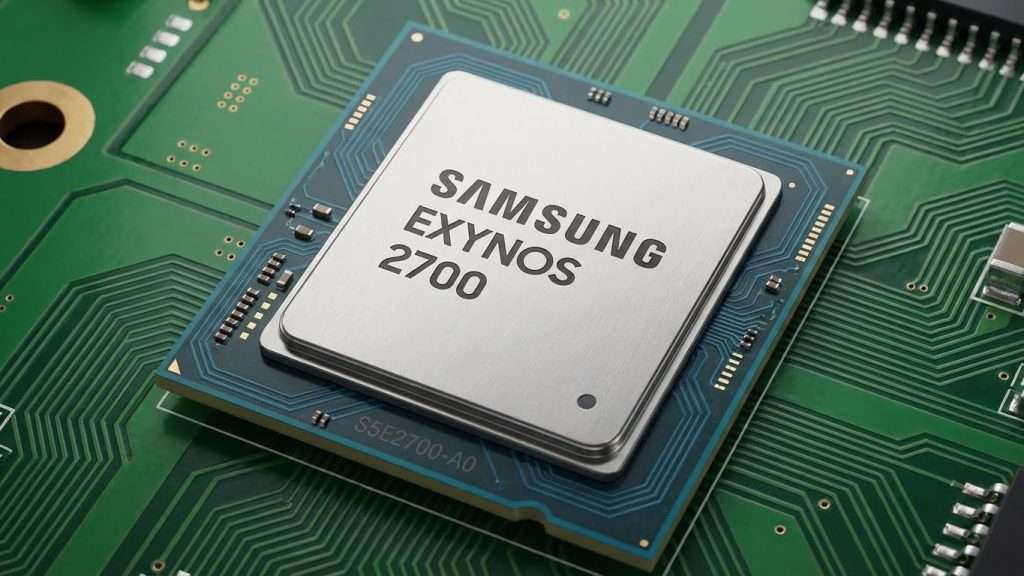
Samsung’s Foundry Utilisation Rate Improves Amidst Challenges
Samsung’s foundry division is gradually recovering from a challenging period, with its operating rate climbing from 50 percent in the latter half of last year to 60 percent, according to a recent report. This improvement is a promising sign for the South Korean tech giant as it aims to steer its foundry business towards profitability by 2027, with an ambitious target of achieving an operating profit of around $69 billion this year.
Key Drivers Behind the Recovery
The boost in Samsung’s foundry utilisation is primarily attributed to increased orders for its 4nm and 8nm process nodes. The company has seen its 4nm yields improve to a more reliable 60-70 percent range, which has helped regain customer confidence. Notably, Samsung secured a $100 million contract with a US-based AI firm to develop an Omni processor, further signalling growing demand for its mid-range semiconductor technologies.
While Samsung’s cutting-edge 2nm Gate-All-Around (GAA) process is making progress, with yields reaching 50 percent, this has not yet been the main driver of the recent uptick in utilisation. The foundry has landed significant deals, including a $16.5 billion agreement with Tesla to mass-produce the AI6 chip, as well as contracts to manufacture chips for Chinese cryptocurrency mining equipment manufacturers.
Background: Overcoming the 3nm GAA Setback
Samsung’s foundry business faced considerable difficulties due to poor yields on its 3nm GAA process, which led to financial losses and a loss of customer confidence. Many clients shifted their orders to rival TSMC, which offered more reliable production at that node. This contributed to Samsung’s non-memory division operating at a loss of approximately 2 trillion won (around $1.36 billion).
However, recent quarters have shown improvement, with the deficit narrowing to about 1 trillion won (roughly $680 million) in the third and fourth quarters of 2025. This indicates that Samsung is slowly moving towards stabilising its foundry operations. Meanwhile, Samsung’s memory division continues to perform strongly amid ongoing shortages, although the company has cautiously increased DRAM production by only 5 percent to 8 million wafers, mindful of future demand fluctuations.
Looking Ahead
Samsung’s foundry business appears to be on a path of gradual recovery, supported by better yields at key process nodes and significant new contracts. As the company continues to refine its 2nm GAA technology and expand orders for its 4nm and 8nm nodes, it is well-positioned to improve its financial performance in the coming years. Industry observers will be watching closely to see how Samsung balances innovation with operational efficiency as it strives to regain competitiveness in the semiconductor foundry market.
For more detailed insights, see the recent coverage by ZDNet.