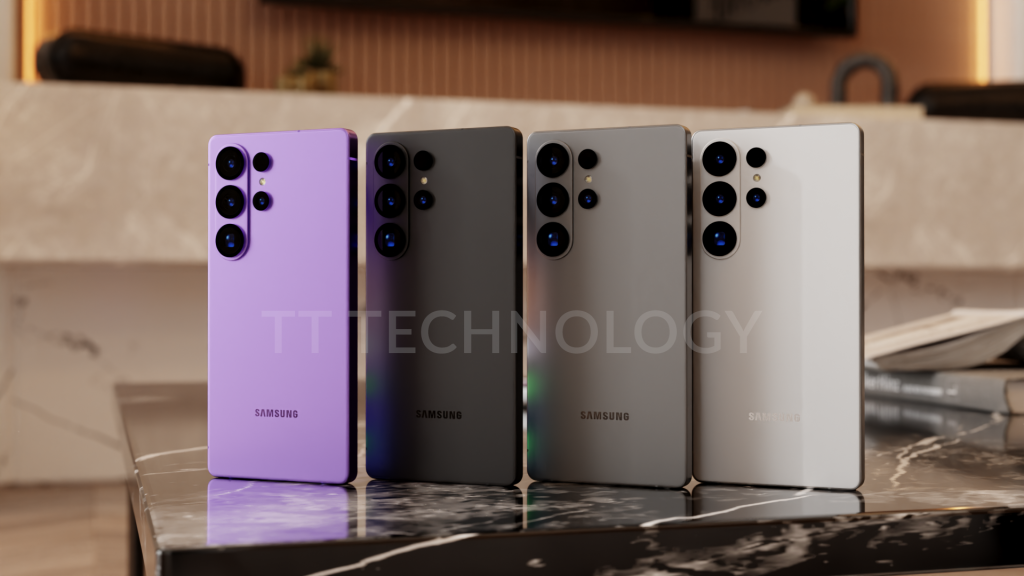
Samsung Innovates with Global Shutter Image Sensor
Samsung is reportedly developing a next-generation camera sensor featuring global shutter technology, a move that has caught the attention of Apple. This advancement could significantly improve the way smartphones capture fast-moving subjects, addressing a long-standing limitation of current camera sensors. Unlike the rolling shutter sensors commonly used today, which expose pixel lines sequentially and often cause distortions in images of moving objects, a global shutter exposes all pixel lines simultaneously, resulting in more accurate and distortion-free images.
Implementing global shutter technology in smartphone cameras has traditionally been challenging due to the complex sensor design and the need for larger pixels, which can reduce image resolution. However, Samsung appears to have overcome these hurdles by introducing a novel pixel structure within a 12-megapixel sensor that maintains a 1.5-micrometer pixel pitch.
Technical Breakthroughs in Pixel Design
Samsung’s innovation involves embedding the analog-to-digital converter (ADC) directly within each pixel, creating a pixel-level ADC. This design typically requires larger pixels—around 3 micrometers compared to the usual 1.5 micrometers found in high-end smartphone cameras. To balance pixel size and sensor performance, Samsung bundles four 1.5-micrometer pixels into a 2×2 array, effectively forming a 3-micrometer unit.
A Samsung official explained that this configuration allows four pixels to share one ADC, enabling part of the sensor to operate like a rolling shutter while the rest functions as a global shutter. Although this hybrid approach introduces slight image distortion, Samsung compensates for it by extracting optical flow data and applying motion compensation algorithms. This technique enables the sensor to deliver global shutter-like characteristics without sacrificing resolution.
Collaboration and Industry Impact
Samsung plans to showcase these developments at the International Solid-State Circuits Conference (ISSCC) in 2026, a prestigious event often regarded as the Olympics of semiconductor technology. Meanwhile, Apple has demonstrated strong interest in global shutter sensors, as seen in its patent filings for integrating such technology into future iPhones.
Both companies are collaborating on next-generation CMOS image sensors, which convert light into digital images using arrays of photosensitive pixels. Samsung’s recent trademark applications for its “DeepPix” CMOS sensor hint at a possible shift away from its long-standing ISOCELL sensor line, signalling a new era in smartphone camera technology.
Apple’s Camera Innovations and Future Prospects
Apple is also pushing the boundaries of camera technology in its upcoming devices. The anticipated iPhone Fold is expected to feature a 24MP in-screen camera with Colour Filter on Encapsulation (COE) technology, enhancing display brightness, resolution, and weight. Additionally, the iPhone 18 may incorporate an under-display TrueDepth sensor for Face ID, utilising spliced micro-transparent glass to allow sufficient light to reach the sensor.
Looking further ahead, the iPhone 20, slated for release in 2027, is rumoured to include a 100MP LOFIC camera sensor. LOFIC sensors excel at capturing both low-light details and bright highlights without noise, balancing light sensitivity and saturation more effectively than traditional CMOS sensors.
As smartphone manufacturers seek new ways to differentiate their products beyond foldable designs, advancements like Samsung’s global shutter sensor and Apple’s innovative camera features could redefine mobile photography in the coming years.
It will be interesting to watch how these technologies develop and when they will be integrated into consumer devices, potentially setting new standards for smartphone imaging performance.