Apple Turns to Intel for Packaging Amid TSMC Capacity Issues
Apple is reportedly planning to use Intel’s Embedded Multi-die Interconnect Bridge (EMIB) technology for the packaging of its bespoke AI server chips, developed in collaboration with Broadcom. This move comes as TSMC, Apple’s usual manufacturing partner, faces significant constraints in its advanced CoWoS (Chip-on-Wafer-on-Substrate) packaging capacity. The shift to Intel’s packaging solution could mark a notable change in Apple’s supply chain strategy for its upcoming server-grade silicon.
Key Specifications and Timeline
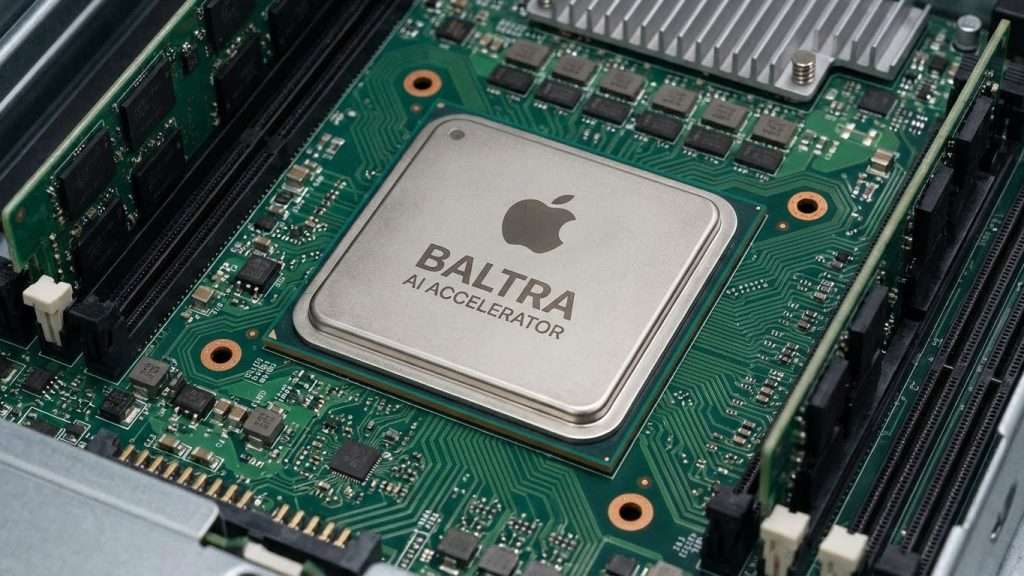
The AI server chip, internally codenamed “Baltra,” is expected to be produced using TSMC’s fabrication facilities but will rely on Intel’s EMIB technology for the back-end packaging. While initial reports indicated shipments might begin in 2027, recent insights from GF Securities Hong Kong suggest that actual deliveries could be pushed to 2028. The chip is part of Apple’s broader strategy to develop custom silicon tailored for artificial intelligence workloads, with Broadcom playing a key role in the design process.
In addition to the server chip, Apple is also evaluating Intel’s 18A-P process node for its lower-end M-series chips, anticipated to launch in 2027. Intel’s 18A-P process is notable for supporting Foveros Direct 3D hybrid bonding, a technology that enables efficient stacking of multiple chiplets. This capability aligns well with Apple’s modular chip design philosophy.
Context and Industry Implications
TSMC’s CoWoS technology is a sophisticated packaging method that stacks CPUs, GPUs, and high-bandwidth memory onto a silicon interposer, facilitating high-performance integration. However, the current bottleneck in CoWoS capacity has led Apple to explore alternative packaging options. Intel’s EMIB technology, which also enables multi-die integration but through a different approach, appears to be a viable alternative.
This development coincides with Intel’s efforts to establish a dedicated ASIC division aimed at supporting custom silicon designs for various clients. For Apple, leveraging Intel’s packaging expertise could help mitigate supply chain risks and diversify its manufacturing partners, especially as demand for AI-optimised chips grows.
Looking Ahead
Apple’s collaboration with Broadcom and Intel signals a strategic pivot in how the company approaches its server chip production. While TSMC remains the primary fabricator, the reliance on Intel’s EMIB packaging suggests a more complex and diversified supply chain. Observers should watch for further updates on shipment timelines and potential impacts on performance and cost as more details emerge.
Overall, this shift highlights the challenges of advanced chip packaging capacity in the semiconductor industry and Apple’s adaptive strategies to maintain its competitive edge in AI hardware.