Qualcomm and Google Deepen Partnership for Automotive AI
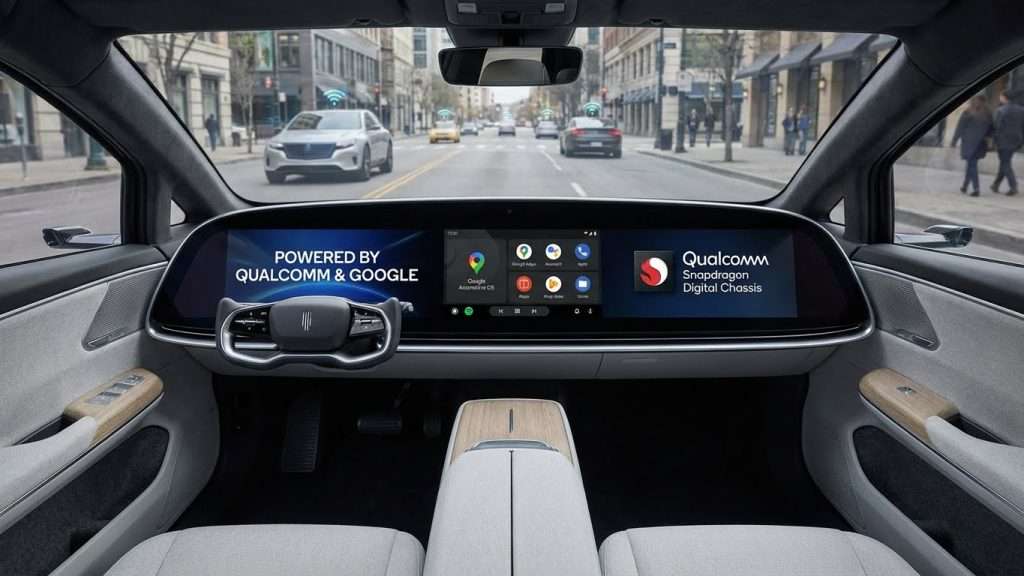
Qualcomm and Google have announced an expansion of their collaboration focused on smart vehicle technology, building on their earlier efforts to integrate Android and Qualcomm’s Snapdragon Digital Chassis platforms. Central to this partnership is the development of what Qualcomm calls an “Automotive AI Agent (AAA),” leveraging Google’s Gemini AI platform to enhance vehicle intelligence and personalise driving experiences. This move follows their initial September announcement aimed at accelerating the adoption of agentic AI in cars.
Key Features of the Unified Automotive Platform
The Snapdragon Digital Chassis platform serves as Qualcomm’s comprehensive software suite designed to empower automakers with in-vehicle experiences, cloud connectivity, autonomous driving capabilities, and more. The new collaboration will see this platform closely integrated with Google’s software ecosystem, including Android Automotive OS (AAOS), to create a unified reference platform that streamlines development and software scaling. AAOS will be optimised for the Snapdragon Chassis, enabling regular over-the-air updates, virtual chipset deployments, and compliance with automotive regulations.
One notable element of the Chassis platform is the Snapdragon Cockpit, which combines GPUs, AI, and a sophisticated software stack to offer features such as facial recognition and natural language processing. Through their joint efforts, Qualcomm and Google aim to synchronise AAOS roadmaps with the Cockpit platform, accelerating development cycles and enabling automakers to deploy new features rapidly across multiple vehicle models and generations using a consistent software foundation.

Cloud Integration and Virtual Chipsets
Another significant aspect of this partnership is the introduction of virtual System on Chips (vSoCs), a cloud-based solution that allows automakers to develop and deploy vehicle features without relying solely on local hardware. Qualcomm claims that vSoCs offer functionality comparable to physical chipsets inside vehicles, facilitating faster and large-scale rollouts of new automotive technologies. This cloud integration is expected to enhance flexibility and scalability in delivering software-defined vehicle experiences.
Project Treble and Future Prospects
Qualcomm has also launched Project Treble to support its Cockpit platform and improve Android rollouts within vehicles. This initiative will support up to 14 different SoCs, promising stable software upgrades, enhanced security, reduced engineering costs, and quicker deployment timelines. Nakul Duggal from Qualcomm highlighted the significance of this expanded collaboration, emphasising how combining Qualcomm’s hardware expertise with Google’s AI and software capabilities will accelerate the transition to software-defined vehicles and unlock the potential of agentic AI for safer, smarter, and more personalised mobility worldwide.
As Qualcomm and Google continue to deepen their automotive partnership, the industry can expect more integrated, AI-driven vehicle experiences that blend cloud computing with advanced in-car technology. The unified platform approach promises to simplify development for automakers and bring innovative features to market more swiftly.