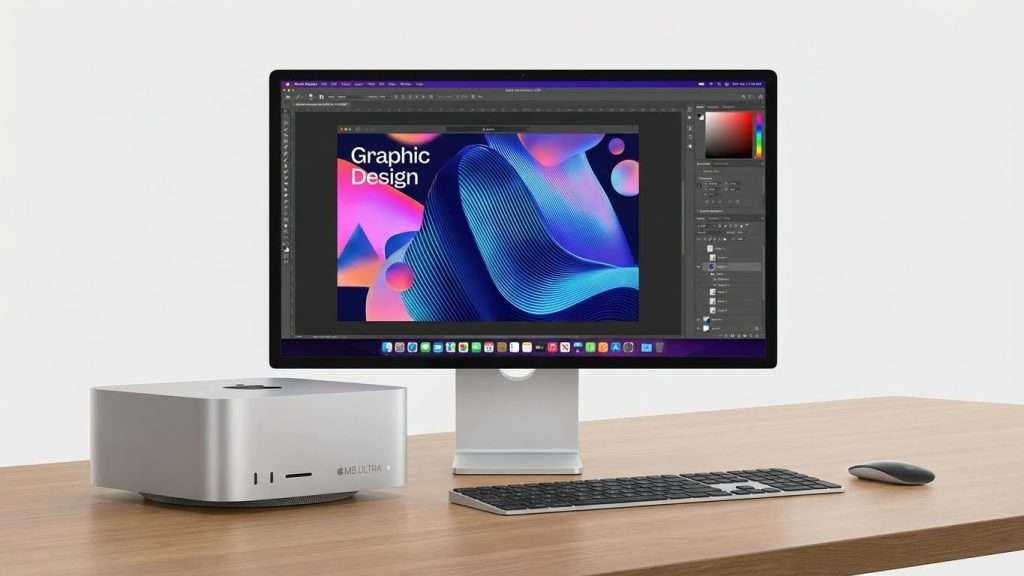
Apple’s Mac mini devices are experiencing a surge in popularity among developers and coders, following a significant breakthrough that allows for easier compatibility with NVIDIA’s CUDA framework. This development comes as a Reddit user successfully ported an entire CUDA backend to AMD’s ROCm platform using Claude Code’s Clawdbot in roughly 30 minutes, effectively challenging CUDA’s dominance in GPU computing. This newfound compatibility is enticing more developers to integrate Apple’s reliable hardware into their workflows.
Key Advantages of Apple Silicon for Machine Learning
One of the core strengths of Apple silicon lies in its unified memory architecture, where the CPU and GPU share the same memory pool. For example, the M4 Pro Mac mini offers 64GB of unified memory, significantly more than the 24GB available on an NVIDIA RTX 4090 GPU. This architecture enables efficient data processing and contributes to Apple’s competitive edge in running machine learning and AI tasks at a lower cost.
Apple continues to enhance this advantage through software improvements such as macOS Tahoe 26.2, which introduced a new driver for MLX, Apple’s proprietary machine learning platform. This update includes support for Thunderbolt 5, offering a maximum bandwidth of 80Gb/s compared to the typical 10Gb/s of Ethernet-based clusters, further boosting performance for demanding workloads.
Overcoming the CUDA Barrier
Despite these benefits, Apple silicon devices have historically faced challenges due to the lack of native support for NVIDIA’s CUDA, a widely used parallel computing platform essential for many AI and image processing tasks. Instead, Apple relies on Metal Performance Shaders (MPS) to accelerate GPU tasks within machine learning frameworks like PyTorch and TensorFlow.
However, the recent success with Clawdbot, which automates the translation of CUDA code to AMD’s ROCm without complex tools like Hipify, is a game changer. This tool preserves the logic of CUDA kernels while replacing CUDA-specific keywords, making it easier for developers to run CUDA-dependent applications on Apple hardware.
Impact on the Developer Community and Apple’s Strategy
This breakthrough has sparked renewed enthusiasm within the ‘vibe coding’ community, a group of developers known for their innovative and efficient coding practices. The ability to seamlessly port CUDA code to Apple-compatible environments is prompting many to adopt Mac minis for their projects.
Apple appears to be capitalising on this momentum by rolling out targeted marketing campaigns that highlight the Mac mini’s strengths alongside the newfound CUDA compatibility enabled by Clawdbot. This strategy aims to attract more developers who previously hesitated due to CUDA limitations.
Looking Ahead
As this development gains traction, it will be interesting to see how Apple continues to build on its silicon’s capabilities and ecosystem to appeal to the AI and machine learning communities. The combination of powerful hardware, improved software support, and tools like Clawdbot could position Apple as a more attractive option for developers working with GPU-accelerated applications.