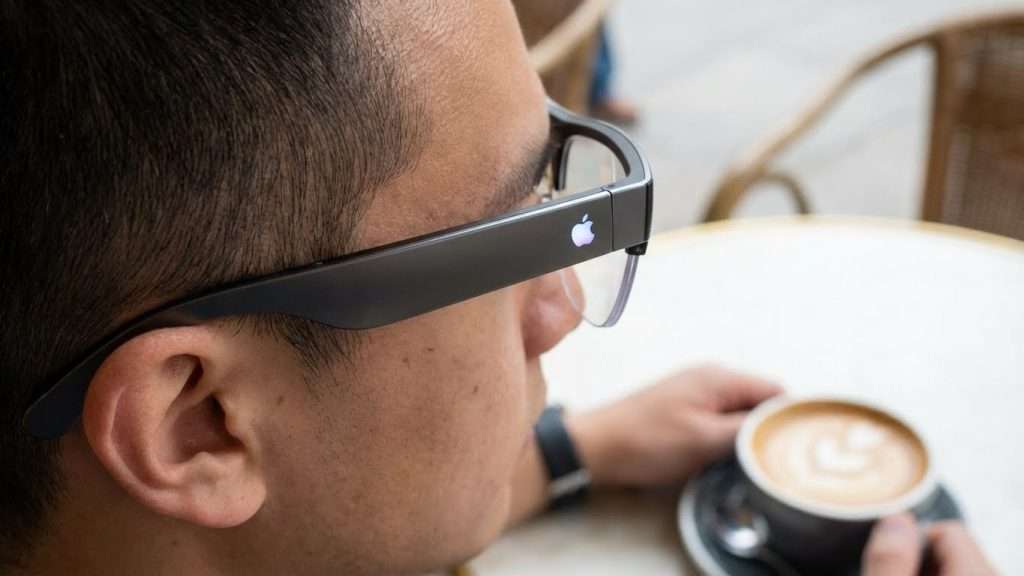
Apple’s AR Smart Glasses Launch Timeline and Display Technology
Apple is reportedly planning to launch its augmented reality (AR) smart glasses in 2028, featuring advanced display technology that promises to set a new standard in visual clarity. According to a recent report from research firm Omdia, Apple’s AR glasses will incorporate dual 0.6-inch OLEDoS (OLED on Silicon) displays, which are known for their ultra-high pixel density and power efficiency. This launch is expected to come several months after Meta introduces its own AR smart glasses, signalling an intensifying competition in the AR wearables market.
Understanding OLEDoS and Its Advantages
OLEDoS technology differs significantly from traditional OLED screens found in smartphones and televisions. Instead of being built on glass or plastic, OLEDoS mounts organic light-emitting diodes directly onto a single-crystal silicon wafer substrate. This integration allows for extreme miniaturisation and superior performance, as the semiconductor manufacturing process enables the circuitry to be embedded within the silicon backplane using CMOS technology. The result is a display with exceptionally high pixel density and improved power consumption, making it ideal for compact AR devices.
Meta’s forthcoming AR glasses, set for release in 2027, will also utilise dual OLEDoS displays combined with a waveguide system. This system projects images directly into the user’s eyes through micro-projectors and semi-transparent mirrors, delivering sharper visuals even in bright outdoor conditions.
Apple’s Interim AI Smart Glasses in 2026
Before the arrival of its AR glasses, Apple is expected to release AI-enabled smart glasses in 2026. These glasses will feature integrated cameras, microphones, and speakers, enabling users to interact with an enhanced version of Apple’s AI assistant, Siri. Key functionalities will include hands-free notifications, real-time AI support, and AI-powered translations. However, these 2026 glasses are not anticipated to have built-in AR display capabilities, positioning them more as AI-driven wearable assistants rather than full AR devices.
Context: Meta and the Growing AR Glasses Market
Meta has been a prominent player in the smart glasses space, with its Ray-Ban smart glasses already offering features such as up to eight hours of mixed use, two hours of continuous live AI support, ultra HD 3K video recording, and an advanced noise cancellation system called conversation focus. Last year, Meta unveiled the Ray-Ban Display smart glasses, which include an in-built display capable of showing text, videos, directions, and live translations at a resolution of 42 pixels per degree. This display is brighter than any of Meta’s consumer VR headsets, with up to 5,000 nits of brightness, ensuring usability both indoors and outdoors.
Additionally, the Ray-Ban Display glasses can be paired with the Meta Neural Band, a control interface that uses electromyography (EMG) to detect hand gestures by reading signals between the brain and hand, allowing users to navigate apps seamlessly.
Looking Ahead
As Apple prepares to enter the AR smart glasses market with cutting-edge OLEDoS displays in 2028, the competition with Meta and other manufacturers like ROG and RayNeo, who plan to launch OLEDoS-based AR glasses this year, will intensify. Apple’s 2026 AI smart glasses will serve as a stepping stone, enhancing user interaction with AI features while the company perfects its AR technology. The next few years promise significant advancements in AR wearables, with consumers likely to benefit from sharper displays, improved power efficiency, and richer interactive experiences.